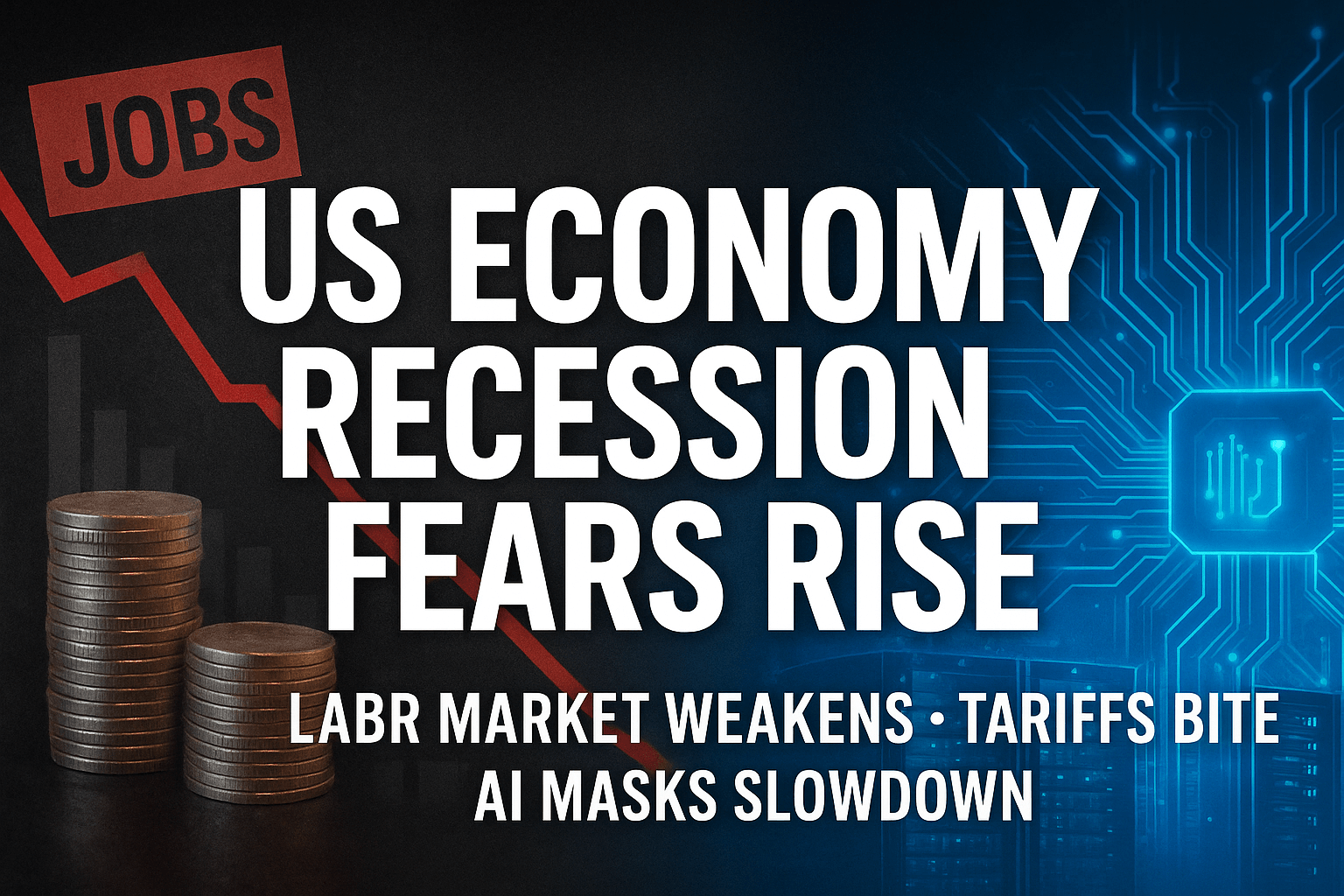
Recession fears are rising as the US labor market weakens and tariffs weigh on growth. Analysts warn of growing risks, but see hope in AI investments and future tax relief.
Amid a sharp slowdown in the labor market and the ongoing impact of new tariffs on consumers and businesses, “worries are mounting that the US economy may be headed for a recession.” That’s not the base case for most forecasters, but analysts are warning of an “increasingly fragile economic balance as growth slows.”
Labor Market Under Pressure
A rapidly cooling jobs market means that “businesses are more reluctant to hire, and some job seekers are having a more difficult time finding work.” The labor force is also shrinking, “thanks to a dramatic slowdown in immigration against the backdrop of the Donald Trump administration’s new restrictions.”
Economists are clear that this is the biggest challenge right now. “The labor market is more vulnerable today than at any point in this expansion,” says Ryan Sweet, chief US economist at Oxford Economics.
Monthly payroll growth data for July and August came in significantly weaker than expected, with downward revisions painting an even bleaker picture. Revisions showed that payrolls actually declined by 13,000 jobs in June. “Negative numbers in the payroll data, especially in consecutive months, almost always indicate that we are in a recession already or very close to one,” says Marisa DiNatale, senior director of economic research at Moody’s Analytics. She estimates the odds of a recession at “roughly 50/50 over the next year.”
Annual revisions also showed that “the economy added more than 900,000 fewer jobs than previously estimated over the course of those 12 months.”
“Low Hire, Low Fire” Dynamic
The labor market is now entering an unusual phase. Economists note that the “breakeven” level of jobs is much lower than in past years. That means job gains above 150,000 or 200,000 are no longer expected. Analysts call this environment “low hire, low fire.”
“Demand for workers has fallen dramatically as businesses pause hiring amid an uncertain economic outlook,” says DiNatale, citing data showing that hiring has dropped to its lowest rate since 2013.
Immigration Restrictions Shrinking the Labor Force
A steady flow of foreign-born workers helped drive labor supply in recent years, but that trend has now reversed. “Less immigration is corrosive on the economy,” Oxford Economics’ Sweet says. Pantheon’s Samuel Tombs estimates that new immigration policies are shaving “a roughly half-percentage point” off GDP growth.
Unemployment Rate Holding Steady—for Now
Despite the slowdown, “the overall unemployment rate hasn’t changed much over the past few months.” DiNatale notes that while unemployment claims have ticked up, they are “not at a concerning level yet.” But Pimco’s Tiffany Wilding warns that “smaller and midsize firms” are more at risk if layoffs increase.
AI Investment Provides a Cushion
While most sectors are stagnant, one area stands out. “One positive for the economy has been the massive amount of investment related to artificial intelligence technologies.”
Sweet notes that this surge has “masked weaknesses elsewhere in the economy.” Wilding adds that the tech cycle could add a full percentage point to GDP growth this year.
Tariffs, Taxes, and the Outlook for Growth
Tariffs remain a drag, but analysts say relief may come soon. “By the spring, we’ll be most of the way through that shock to households, and they will be starting to see some benefit from the tax cuts,” says Tombs.
Still, DiNatale warns that some aspects of the tax bill could hurt growth, such as “the reduction in eligibility for Medicare and Medicaid.”
GDP Still Growing, but Risks Remain
Gross domestic product rose 3.3% in the second quarter after dipping negative earlier in the year. Tombs forecasts 1.5% annualized GDP growth in the third quarter, far from a technical recession. But DiNatale cautions: “Given what we’re seeing in the job market, it feels very strange to say we’re not in a recession if people are losing their jobs.”
Where Things Stand
“I think we’re settling in for a period of quite slow growth now for a few quarters,” Tombs says. DiNatale adds: “Things are probably going to get worse before they get better this year. Tariff rates will likely rise before the end of the year, with the peak impact on the economy coming in the fourth quarter.
Oracle of Wall Street Warns US Housing Market Faces Demographic Trouble