
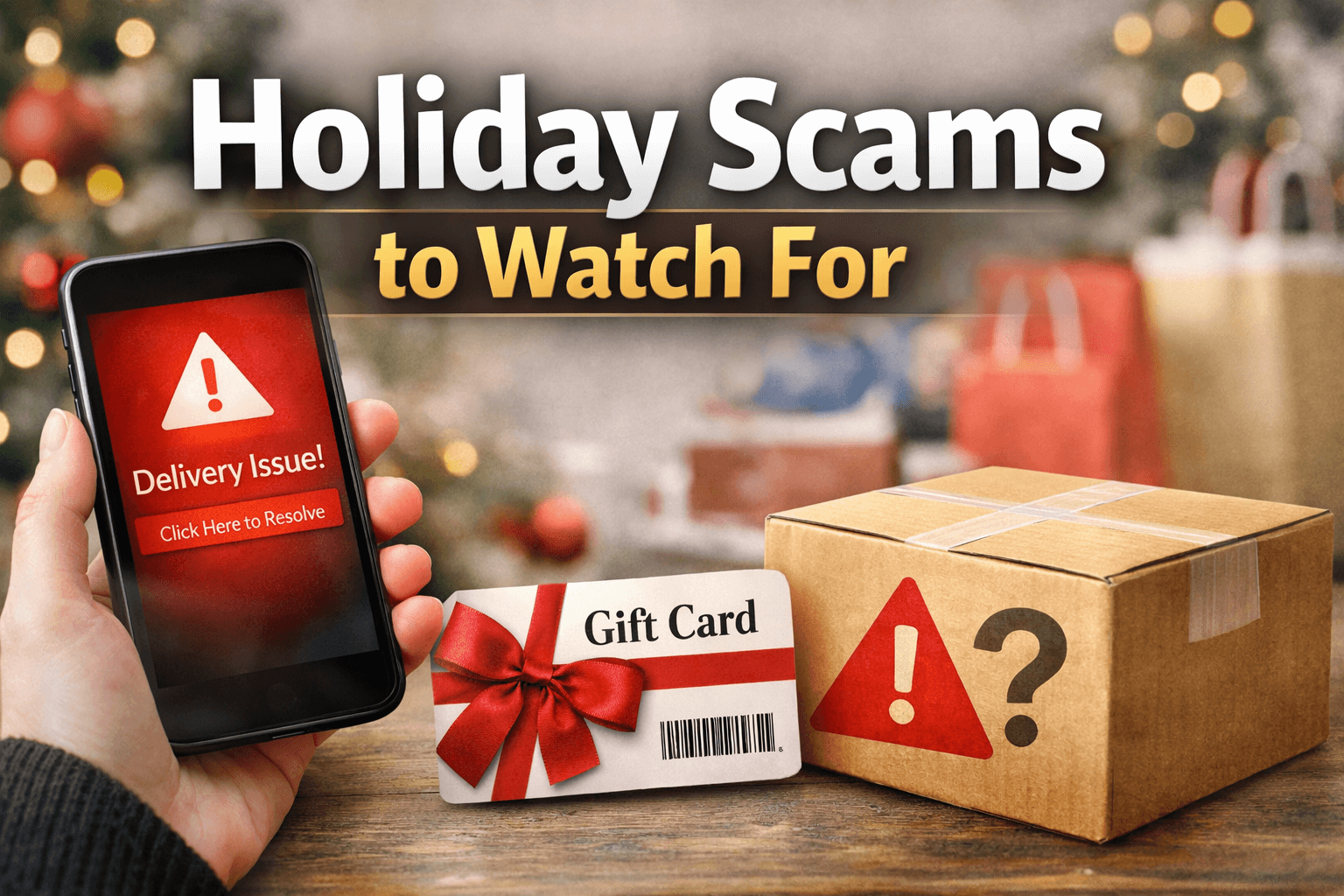
Scammers take advantage of holiday shopping stress with fake retail ads, gift card fraud, delivery text scams, and travel deals that appear too good to be true. Consumer experts explain how these scams work and how to protect yourself.
The holiday season is a time of urgency — last-minute shopping, travel planning, and constant notifications. That pressure can make people easier targets.
“It’s easy to lose our critical thinking skills around the holidays,” as increased anxiety and distraction can leave consumers “more vulnerable.”
“There’s a lot of hustle and bustle during the holiday season, so there’s a lot more opportunities for scammers to steal from us,” says Amy Nofziger, senior director of Fraud Victim Support at the AARP Fraud Watch Network, a fraud prevention service.
According to a recent AARP survey of nearly 2,000 U.S. adults, “nearly 9 out of 10 reported being targeted by or falling for some type of scam during the holiday season in the past year.” Common schemes included fake shipping notifications, stolen packages, and fake charity and donation requests.
Nofziger says understanding how these scams work can help people avoid fraud. She highlights four schemes her team commonly sees during the holidays.

Fake Retail Ads on Social Media
Scammers often create temporary online stores on social media platforms. These shops sell what appear to be branded clothing or jewelry, using “stolen logos or similar domain names to appear authentic.”
“The store might disappear shortly after you’ve placed your order.”
How to protect yourself
“If you’re using a vendor that you haven’t normally used, take the name of the vendor, put it in a new search, type the words ‘scam,’ ‘fraud’ and ‘complaint’ after it, and use other shoppers’ experiences with the company to guide your own,” Nofziger says.
She also recommends paying with a credit card. “You have greater consumer protections,” she says, which can make it easier to recover money if a scam occurs.

Gift Cards That Have Already Been Compromised
Buying gift cards may seem simple, but scammers can access card numbers and PINs before the cards are sold.
“They actually remove stacks of gift cards off of the card carousels, log every gift card number and PIN into their system, then load those gift cards back onto the carousels,” Nofziger says.
Once money is added, “scammers are notified and able to instantly withdraw it.” In some cases, “you could not even have left the store yet and that money could be drained.”

How to protect yourself
Nofziger advises choosing gift cards located “close to the front of the store,” where more employees and customers are present. She also suggests purchasing electronic gift cards instead of physical ones, which are less likely to be tampered with.
Fake Package and Delivery Text Messages
Unexpected packages are more common during the holidays, and scammers use that expectation to their advantage.
“They’ll send out fake notifications saying that they’re from a shipping company and that there’s a problem with your account,” such as a missing address detail, Nofziger says.
“But most of the time, if there’s a problem with a package, you will hear directly from the vendor.”
How to protect yourself
If you receive a text from a company like UPS or FedEx asking for personal information, Nofziger recommends contacting the company directly through its official customer service line.
You can also verify delivery details through the company’s website. In many cases, “this is nothing but a phishing scam,” designed to trick people into sharing personal information.
Travel Deals That Seem Unusually Cheap
Holiday travel costs often rise, pushing people to search for better deals online. But unusually low prices can be a warning sign.
Nofziger says her team frequently hears about car rental scams. “People think they’re getting a great deal, but they have to prepay with a prepaid gift card,” she says. “Then they get to their location and there’s no car.”
How to protect yourself
She recommends booking through companies you already know and trust and carefully researching any unfamiliar travel website before making a payment.
What to Do If You’re Scammed
If fraud does occur, Nofziger emphasizes that it’s common and encourages quick action.
“Be proactive and report it as quickly as possible,” she says.
Incidents can be reported to local law enforcement, the Federal Trade Commission, and the AARP Fraud Watch Network to help limit damage and prevent others from being affected.
Amazon Shoppers Are Buying These Trending Kitchen Products Starting at Just $6